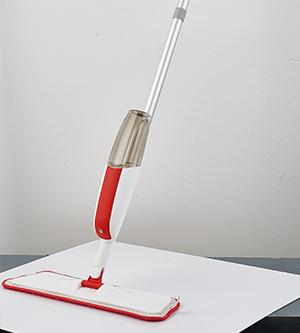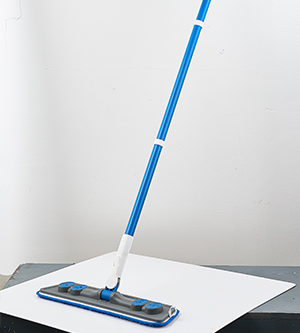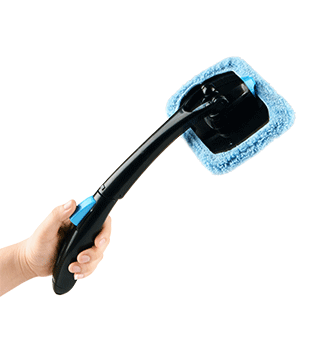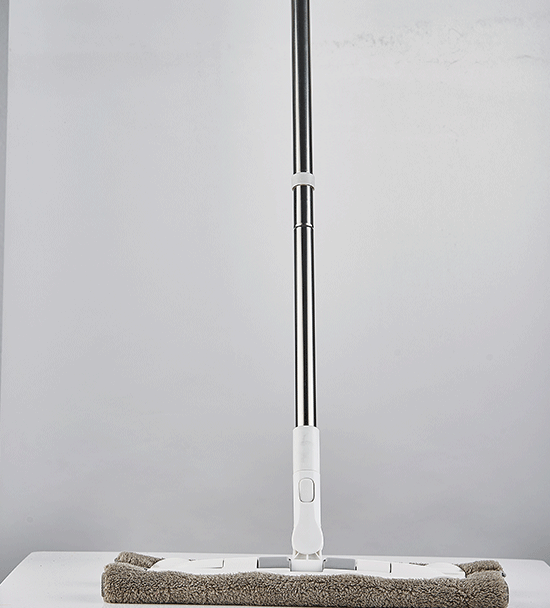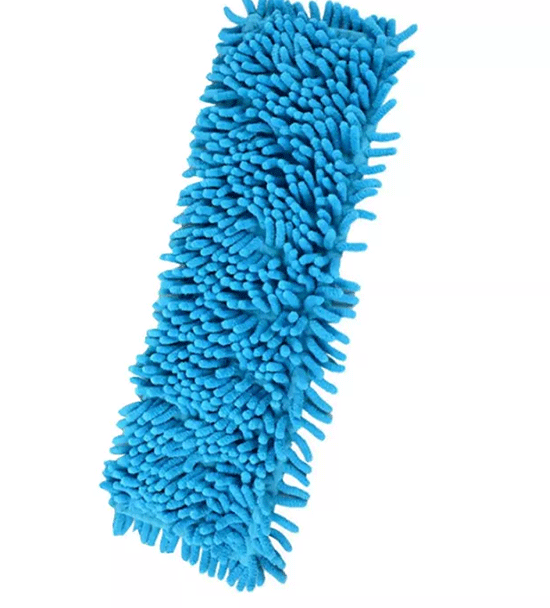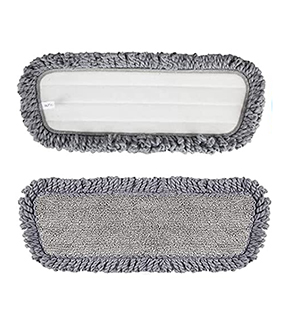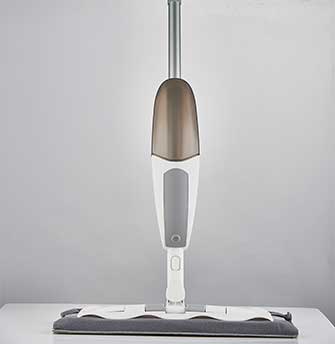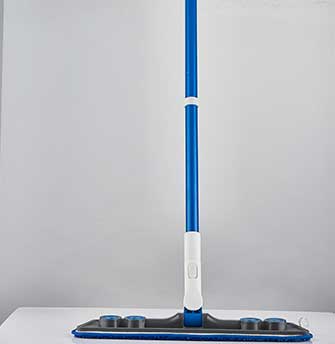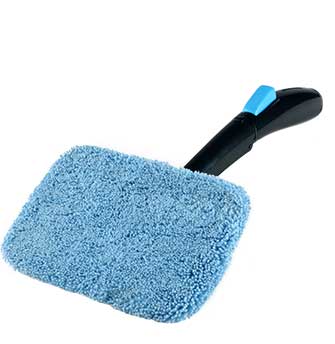

A spray mop combines floor cleaning, solution application, and microfiber wiping in one handheld tool. For users, this can mean fewer buckets, less excess water, and faster everyday cleaning. For importers and private-label brands, however, the performance of a spray mop depends on several structural details that may not be obvious from product appearance alone.
When evaluating an infuse spray mop, buyers should consider the water bottle, trigger mechanism, spray nozzle, mop-head rotation, microfiber pad, handle construction, and the way these components perform together.
A well-designed spray mop should deliver controlled solution coverage while remaining easy to maneuver around furniture and suitable for repeated daily use.
Traditional wet mopping normally involves a separate bucket containing water or cleaning solution. The user repeatedly wets and wrings the mop before returning to the floor.
An infuse spray mop carries the cleaning solution directly on the mop.
By pressing a trigger, the user releases a controlled spray in front of the mop head and immediately wipes the area with the attached cleaning pad.
This creates several practical differences:
no separate bucket is required;
water application can be controlled more precisely;
cleaning solution is applied only where needed;
the floor is less likely to become excessively wet;
spot cleaning becomes faster.
This makes spray mops particularly useful for kitchens, living rooms, offices, apartments, and other areas requiring frequent light cleaning.
For product buyers, the advantage depends on whether the spray mechanism remains consistent after repeated operation. A product that looks convenient but develops trigger or nozzle problems will quickly lose its value.
Tank capacity affects both weight and cleaning convenience.
A very small bottle requires frequent refilling. A very large bottle adds weight to the handle and can make the mop less comfortable to maneuver.
Merrell's spray mop range includes models using approximately 400 ml solution bottles, providing a balance between cleaning coverage and manageable product weight.
The correct capacity should be considered according to the intended user.
For small apartments and everyday residential cleaning, a moderate reservoir is usually sufficient.
For larger homes or light commercial applications, buyers may prefer a larger-capacity configuration if the additional weight does not reduce usability.
The bottle design also matters.
Important factors include:
easy removal;
leak resistance;
convenient refilling;
secure connection to the mop;
compatibility with cleaning solutions.
For OEM projects, buyers should also confirm whether the bottle is transparent or translucent. Being able to see the remaining liquid can improve user convenience.
The trigger is one of the most frequently operated components on a spray mop.
A reliable trigger system should activate consistently without requiring excessive hand force.
The nozzle then determines how the liquid reaches the floor.
Good spray coverage should wet an appropriate area in front of the mop without producing one concentrated stream or excessive mist.
If the spray is too narrow, users may repeatedly activate the trigger to cover a normal cleaning path.
If it is too wide or applies too much liquid, the floor may become unnecessarily wet.
A professional spray mop factory should therefore pay attention to both mechanical trigger durability and nozzle performance.
Buyers can evaluate sample products by checking:
trigger resistance;
spray width;
spray consistency;
leakage after storage;
response after repeated triggering.
For private-label products, these details can have a greater influence on customer satisfaction than small cosmetic differences.
Floor cleaning rarely happens in open rectangular spaces.
Users need to clean:
under tables;
around chair legs;
beside cabinets;
near walls;
under beds and sofas.
A 360° rotating mop head helps the cleaning pad change direction without requiring the user to lift and reposition the whole mop.
This is especially useful when the mop head has a relatively low-profile design.
For an infuse spray mop, the relationship between handle joint and mop head should be evaluated carefully.
If the joint is too loose, the head may feel unstable.
If it is too stiff, maneuverability becomes limited.
The mop head should rotate freely while still giving the user enough directional control.
This structural detail is particularly relevant for apartment and household cleaning products, where furniture density can be high.
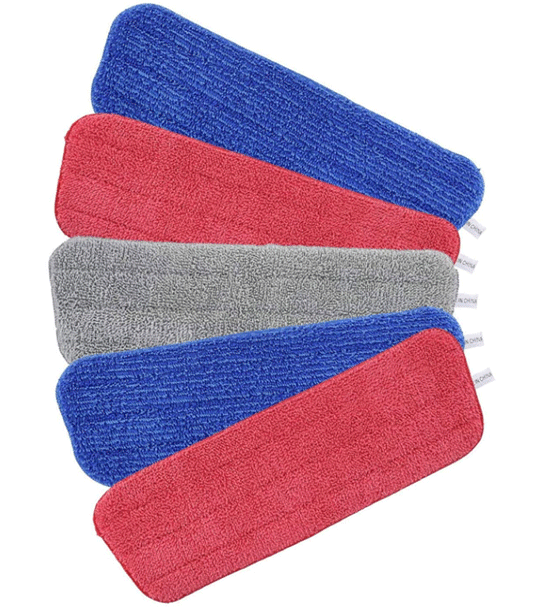
The microfiber pad is the part that actually contacts the floor.
A good spray mechanism cannot compensate for a poorly performing pad.
Microfiber cleaning material can provide both dust pickup and moisture absorption. Its fine fiber structure helps collect small particles while holding water during damp cleaning.
Different pad designs may emphasize:
dust collection;
absorbency;
scrubbing;
hair pickup;
polishing.
For a multi-purpose spray mop, buyers should consider whether the standard pad can perform both light dry dusting and damp cleaning.
Washability is another important factor.
Reusable pads can reduce the need for disposable cleaning sheets and improve long-term product value.
A removable, machine-washable microfiber pad also makes the product more convenient for repeated household use.
Buyers should confirm pad size and attachment method before production because replacement-pad availability can influence the long-term customer experience.
Choosing a spray mop supplier involves more than comparing unit prices.
Importers and brands should evaluate the complete product system.
Key questions include:
What material is used for the handle?
What is the bottle capacity?
Is the bottle removable?
How many trigger cycles has the mechanism been tested for?
Does the nozzle produce consistent spray?
Does the head rotate 360 degrees?
What pad material is supplied?
Can replacement pads be ordered?
What colors can be customized?
Can logo and retail packaging be customized?
OEM/ODM buyers should also consider assembly quality.
Connections between the handle, bottle, trigger, mop head, and pad attachment need to remain stable during repeated use.
For a brand owner, a reliable product platform is usually more valuable than selecting the lowest-cost configuration and then handling higher complaint rates after launch.
It can be used on suitable sealed hardwood surfaces when only a controlled amount of cleaning liquid is applied. Users should follow the floor manufacturer's care recommendations.
It makes refilling and cleaning the reservoir easier and allows users to prepare cleaning solution separately.
Many microfiber pads are washable and reusable, although washing instructions should be followed to preserve cleaning performance.
It can make it easier to maneuver around furniture, corners, and narrow spaces.
Buyers should confirm structural materials, bottle capacity, spray performance, mop-pad specification, customization options, packaging, quality control, and replacement-part availability.
A successful infuse spray mop should combine reliable spray control, manageable reservoir capacity, flexible movement, and an effective reusable cleaning pad. For importers and private-label brands, evaluating these structural details before mass production can help create a product that performs consistently beyond the showroom sample.