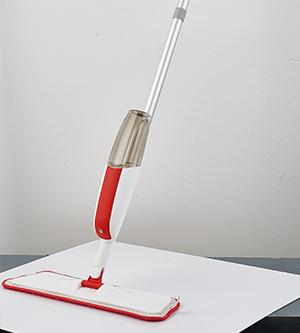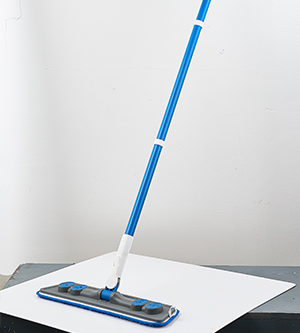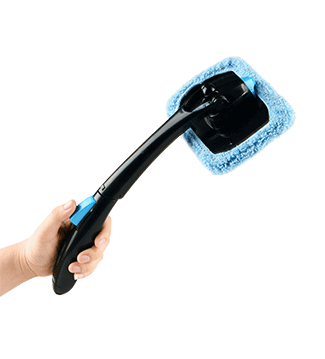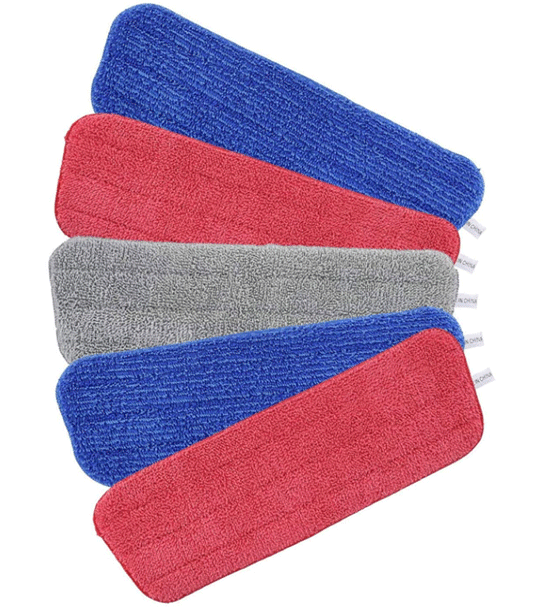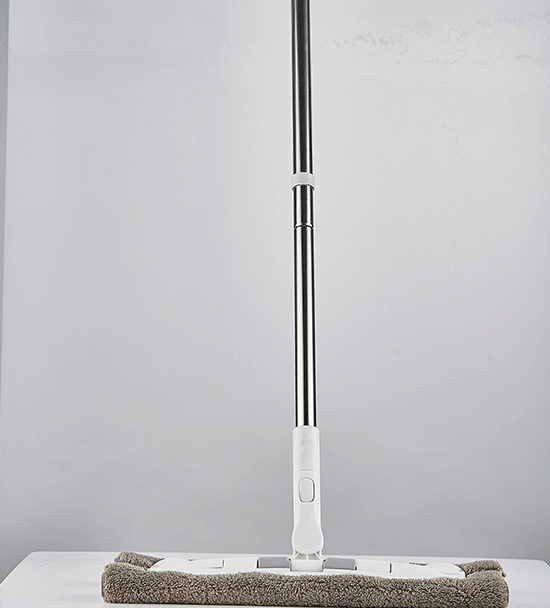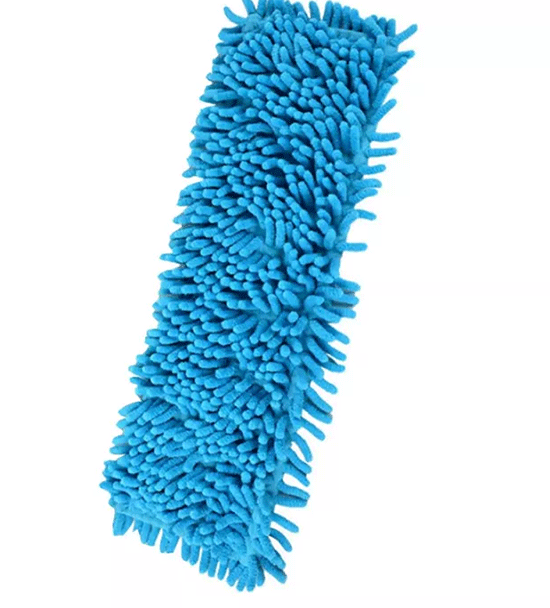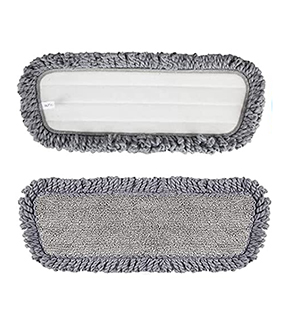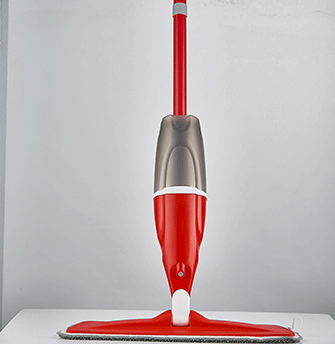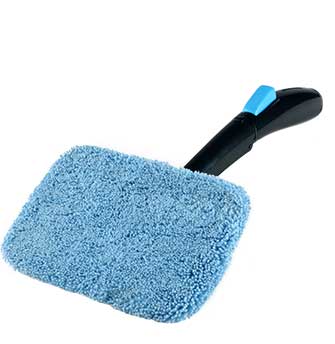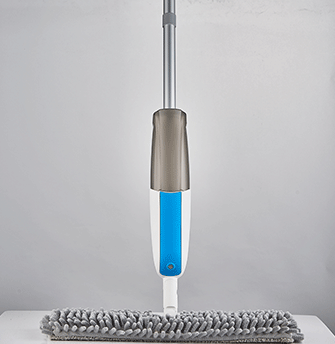

Flat mops are widely used because their low-profile heads can cover large floor areas while reaching under furniture more easily than many traditional mop designs. However, the actual cleaning performance depends heavily on the pad attached to the mop head.
A flat mop pad influences dust pickup, water absorption, scrubbing ability, glide resistance, and floor compatibility. Selecting the correct pad therefore requires more than checking whether it looks similar to an existing replacement.
Buyers should evaluate size, attachment method, microfiber construction, washing performance, and the type of floor the pad is expected to clean.
The first requirement is physical compatibility.
A pad that is too small may not cover the complete mop head, leaving hard plastic edges exposed.
A pad that is too large may fold or bunch during cleaning, reducing stability.
Merrell's flat mop pads include standard formats around 40 × 20 cm, suitable for compatible flat-mop structures.
However, buyers should confirm the exact dimensions of their mop head rather than assuming all products follow one universal standard.
Important measurements include:
pad length;
pad width;
mop-head dimensions;
attachment position;
allowable tolerance.
For OEM projects, pad size and mop-head design should ideally be developed together.
This avoids a situation where the mop frame and replacement pad technically fit but do not remain stable during directional changes.
Microfiber is widely used in modern mop pads because the fine fiber structure can collect both dry particles and liquid contamination.
Well-designed microfibre mop pads can perform several functions at once:
capture dust;
absorb water;
pick up hair;
remove light stains;
hold cleaning solution.
Merrell's flat mop pad design uses different fiber zones to combine loosening and collection functions.
The outer cleaning structure can help disturb dirt from the floor surface, while the internal microfiber area absorbs moisture and captures debris.
Fiber density matters.
A very thin pad may dry quickly but provide limited absorption and cushioning.
A denser pad can hold more moisture but may create more drag during cleaning.
The ideal balance depends on whether the product is intended primarily for dry dusting, wet mopping, or mixed household cleaning.
Two pads with the same dimensions may still be incompatible if they use different attachment systems.
Common methods include:
hook-and-loop attachment;
pockets;
clips;
tabs;
elastic edges.
Hook-and-loop systems can make pad removal fast and convenient, especially when users frequently wash and replace the pad. For users and buyers looking for convenient cleaning maintenance, microfiber replacement pads provide an easy option to refresh mop performance when the original pad needs to be changed.
Pocket-style designs can provide a more mechanical connection but may take slightly longer to install.
When buyers source microfiber pads for mop replacement programs, they should confirm the attachment design with actual mop-head samples or drawings.
This is particularly important for online replacement-pad sales.
Customers often search by pad size but may return the product if the fastening system does not match their mop.
For branded mop systems, offering clearly specified replacement pads can also increase repeat purchasing after the initial mop sale.
Some flat mop pads are designed primarily for wet cleaning, while others perform better for dust collection.
A general-purpose microfiber pad can often support both tasks, but the ideal structure changes slightly.
For dry dusting, buyers may prioritize:
fine fiber density;
static dust pickup;
hair collection;
smooth floor contact.
For wet mopping, priorities include:
absorbency;
water release;
scrubbing performance;
resistance to excessive saturation.
A reusable flat mop pad designed for both dry and damp cleaning can be attractive to consumers because one mop can serve several daily cleaning tasks.
However, users should avoid soaking the pad unnecessarily when cleaning moisture-sensitive floors.
A spray bottle or controlled dampening method can help maintain a more appropriate moisture level.
The cleaning pad must interact safely with the floor surface.
For sealed hardwood floors, a soft microfiber surface and controlled moisture are usually preferred. Excess water should be avoided.
Laminate also benefits from low-moisture cleaning. A microfiber pad can help remove dust and light dirt without saturating joints.
Tile surfaces can tolerate more moisture and may benefit from a pad with stronger scrubbing zones, particularly around textured surfaces.
Microfiber can provide effective everyday cleaning while remaining gentle on the surface.
Smooth indoor concrete may require a more durable pad, especially where dirt levels are higher.
Merrell's microfiber flat mop pads are suitable for multiple hard-floor types, including hardwood, laminate, ceramic, vinyl, concrete, and tile.
For buyers, this versatility can simplify SKU planning if one pad is intended for general household use.
Reusable microfibre mop pads need to maintain their structure after repeated washing.
A pad may look effective when new but lose performance if the fibers flatten, attachment material weakens, or the fabric changes shape after laundering.
Users should follow appropriate washing instructions.
In general, avoiding excessive fabric softener can help preserve microfiber's cleaning properties because softening agents may coat the fibers.
Replacement timing depends on:
cleaning frequency;
floor condition;
washing method;
fiber wear;
attachment durability.
There is no single universal replacement interval.
Instead, users should replace a pad when it no longer collects dirt effectively, remains permanently stained, loses shape, or cannot stay securely attached.
For suppliers, washable replacement pads can also support a more sustainable product positioning compared with purely disposable systems.
For wholesale or OEM orders, buyers should specify:
finished pad dimensions;
microfiber composition;
pad weight or density;
attachment method;
intended mop-head size;
target floor types;
washing requirements;
packaging;
logo or label requirements;
annual order volume.
Samples should be tested on the actual mop frame.
This allows buyers to evaluate:
installation;
pad movement;
edge coverage;
floor glide;
cleaning performance;
removal after use.
A replacement flat mop pad is a functional component, not simply a piece of fabric cut to a certain size.
Fit and fiber performance should be verified together.
No. Dimensions and attachment systems vary between mop designs, so compatibility should be checked before purchase.
Many general-purpose pads can support both, but the fiber structure and moisture level should match the cleaning task.
Soft microfiber pads can be suitable for sealed hardwood when used with controlled moisture.
Follow the manufacturer's instructions and avoid treatments that may coat the microfiber and reduce absorbency or dust pickup.
Thickness affects water absorption, cleaning feel, durability, and resistance when the mop moves across the floor.
Replace it when fibers become significantly worn, cleaning performance declines, the pad loses shape, or the attachment no longer works reliably.
Choosing the right flat mop pad requires matching dimensions, attachment, fiber structure, cleaning method, and floor type. For both consumers and OEM buyers, treating the pad as an engineered cleaning component rather than a generic replacement helps improve overall mop performance.