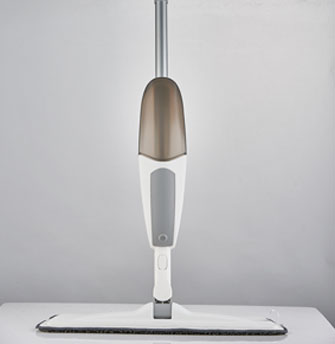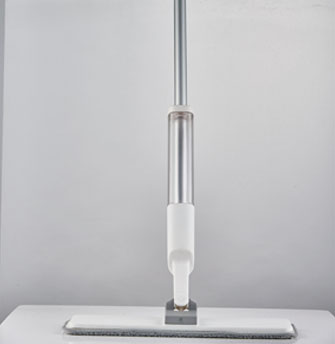

Reusable mop pads are available in different fiber structures, and the visible difference between chenille and standard microfiber affects more than appearance. Pad texture influences how much liquid the mop can collect, how effectively it captures loose debris, how easily it moves across the floor, and how it should be washed after use.
A chenille pad uses raised, finger-like microfiber strands that create a thick cleaning surface. A standard microfiber pad normally has a flatter woven or looped structure. Both can support reusable floor-cleaning systems, but they are better suited to different tasks.
For retailers, distributors, and cleaning-tool brands, comparing absorbency, dry dust pickup, durability, and mop compatibility helps determine which pad should be included with a complete mop set or sold as a replacement accessory.
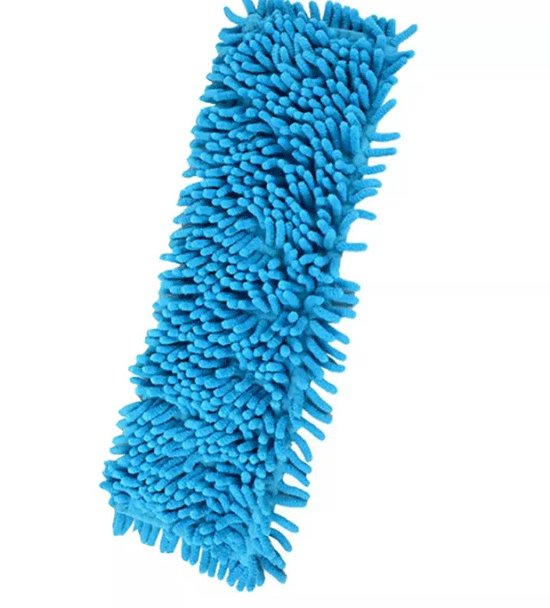
The main difference is the structure of the cleaning surface. Chenille pads contain dense microfiber strands that extend away from the pad base. These strands create additional contact points and spaces where dust, hair, crumbs, and moisture can collect.
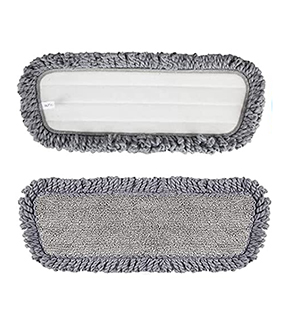
A standard microfiber mop pad has a lower-profile surface. Depending on its weave and density, it can maintain closer and more consistent contact with the floor. This structure often suits routine damp wiping, light stain removal, and cleaning under furniture where a thick pad may create more resistance.
The practical differences can be summarized as follows:
| Comparison factor | Chenille mop pad | Standard microfiber mop pad |
|---|---|---|
| Surface structure | Thick raised strands | Flatter woven or looped surface |
| Loose debris pickup | Strong for dust, hair, and crumbs | Effective for fine dust and routine wiping |
| Liquid capacity | Generally suited to spills and moisture collection | Suitable for controlled damp cleaning |
| Floor movement | Soft but may create more drag when wet | Usually smoother during regular mopping |
| Dry cleaning | Well suited to dust pickup | Suitable for light dusting |
| Washing | Requires thorough rinsing between strands | Often easier to rinse and dry |
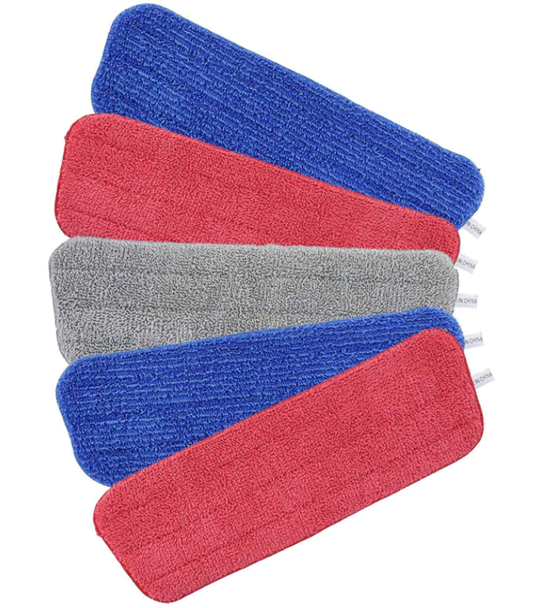
Merrell’s chenille pad uses a double-sided microfiber construction. Its dense fiber surface is intended for stain removal and liquid absorption, while the removable pad can be washed and reused. The standard product measures 41 × 17 cm and is designed for hard floors including hardwood, laminate, ceramic, vinyl, concrete, and tile.
Absorbency is one of the main reasons buyers choose reusable chenille mop pads. The raised strands create a thick working layer that can hold moisture between the fibers. This makes chenille useful for collecting small spills, cleaning kitchens, or covering larger areas before the pad needs to be removed and rinsed.
A standard microfiber pad may hold less free liquid, but that can be an advantage when the cleaning process requires controlled moisture. On laminate or wood flooring, users often want a damp surface rather than a heavily saturated pad. A flatter pad can distribute a limited amount of cleaning solution more evenly across the floor.
The better option therefore depends on the cleaning objective:
Choose chenille for spill pickup, more absorbent cleaning, and loose debris.
Choose standard microfiber for routine damp wiping and controlled liquid application.
Use more than one pad when cleaning large areas so that a saturated or dirty pad can be replaced before it redistributes moisture and soil.
Absorbency should not be evaluated only when the pad is new. Buyers should also test how the material performs after repeated washing, because fiber condition, stitching, and backing quality influence long-term usability.
A chenille dry mop pad can be used without added water to collect loose dirt before damp cleaning. Its raised strands reach around small particles and provide more places for hair and dust to become trapped.
This is useful in homes with pets, entry areas with sand or crumbs, and rooms where dry debris should be removed before a cleaning solution is applied. Dry mopping first can also prevent loose dust from turning into wet residue during the next cleaning stage.
Standard microfiber pads can still perform well for dry dusting, especially on smooth floors. Their flatter surface may glide more easily and collect fine particles across a broad area. Chenille generally has an advantage when the floor contains mixed debris such as hair, crumbs, and visible dust.
For retailers, the intended use should be stated clearly on the packaging. Consumers need to know whether the pad supports dry use, wet use, or both. Merrell’s chenille pad can be used with water or a compatible cleaning solution and is designed as a removable, reusable cleaning surface.
Both chenille and standard microfiber pads can be reusable, but their construction affects washing and drying.
Chenille strands can retain dirt between the fibers, so the pad should be shaken or rinsed before machine washing. Heavy debris, hair, and threads should be removed to prevent them from remaining trapped during the wash cycle. The thicker structure may also take longer to dry than a flat microfiber pad.
Standard microfiber pads are normally easier to rinse because their surface is less bulky. They may therefore suit commercial routines where pads must be washed, dried, and returned to use quickly.
For either type, users should:
Remove loose dust and hair before washing.
Follow the supplied temperature and cycle instructions.
Avoid washing heavily contaminated pads with clothing.
Dry the pad completely before storage.
Replace pads when the attachment, stitching, or fiber surface no longer performs properly.
Washability should be tested as part of a wholesale product evaluation. A pad that cleans well initially but loses shape, shrinks, or separates from its backing after several cycles may create customer complaints and replacement costs.
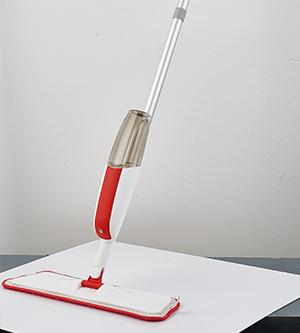
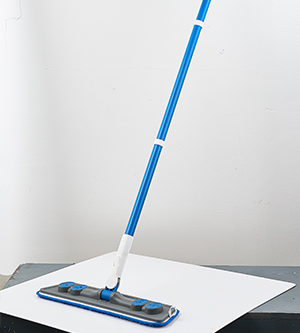
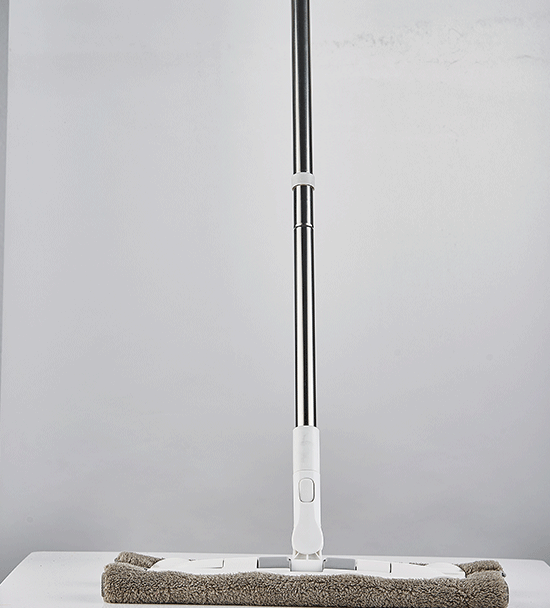
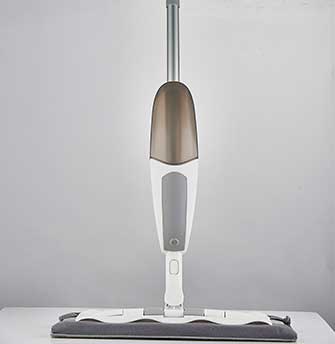
The decision does not need to be limited to one pad type. A cleaning-product line can include both chenille and standard microfiber options for different rooms and customer needs. For users who need compatible solutions for spray mop systems, power action spray mop replacement pads can provide a convenient option for replacing worn cleaning pads.
Chenille is particularly suitable for:
Dry dust and pet-hair collection
Kitchen spills
Entryway debris
More absorbent wet cleaning
Consumers who prefer a soft, thick pad
Standard microfiber is often suitable for:
Everyday damp mopping
Controlled cleaning on moisture-sensitive floors
Smooth movement across large areas
Low-clearance cleaning under furniture
Faster washing and drying routines
Pad dimensions and attachment style must match the mop head. Merrell’s chenille pad is supplied in a 41 × 17 cm format, with color customization available for wholesale programs. The listed packaging is one pad per paper card, while bulk order specifications can be discussed according to the buyer’s product plan.
Bulk buyers should test the complete pad rather than selecting it by material name alone. Two products described as chenille microfiber may differ in fiber density, backing strength, edge stitching, absorbency, and attachment performance.
The supplier review should include:
Finished pad dimensions and tolerance
Fiber density and surface consistency
Backing and edge-stitching strength
Compatibility with the intended mop head
Wet and dry cleaning performance
Condition after repeated wash cycles
Color and packaging options
MOQ, production capacity, and lead time
Merrell lists an MOQ of 3,000 pieces and a production capacity of 6,000 sets per day for its chenille mop pad. Sample preparation is listed at approximately one week, with production lead time around 30 days after payment terms are confirmed. Final commercial terms should be reconfirmed for each customized order.
Their thicker, raised strands generally make them well suited to collecting spills and holding moisture. Actual absorbency still depends on fiber density, pad size, and construction quality.
Yes. A chenille dry mop pad can collect dust, hair, crumbs, and other loose debris before wet cleaning.
They can be used on hardwood when the pad is clean and only the permitted amount of moisture is applied. Users should follow the flooring manufacturer’s cleaning instructions.
A standard flat microfiber pad is often easier to rinse and dry. Chenille pads require more attention to remove dirt or hair trapped between the strands.
Yes. Buyers can discuss pad color, packaging, branding, and other specifications according to the order quantity and mop system.
Chenille and standard microfiber mop pads serve different but complementary cleaning needs. Chenille offers a thicker surface for absorbency, dry dust pickup, hair collection, and spill cleaning. Standard microfiber provides controlled damp cleaning, smooth floor contact, and relatively simple washing.
Wholesale buyers should select the pad according to the intended floor, cleaning method, mop-head design, and consumer expectations. Testing absorbency, dust pickup, wash durability, dimensions, and attachment strength before production helps ensure that the final reusable mop pad performs consistently throughout its service life.